
What is Zen Interior Design?
Zen interior design is a Japanese approach built on restraint: few objects, natural materials, generous light, and space deliberately left empty. It grew out of Zen Buddhism, and its purpose is not a look. It is a state: a room that lets the mind settle.
Zen design is described as a style, a palette of pale wood and beige linen, but it is closer to a method. Every decision is tested against one question: does this quiet the room, or crowd it?
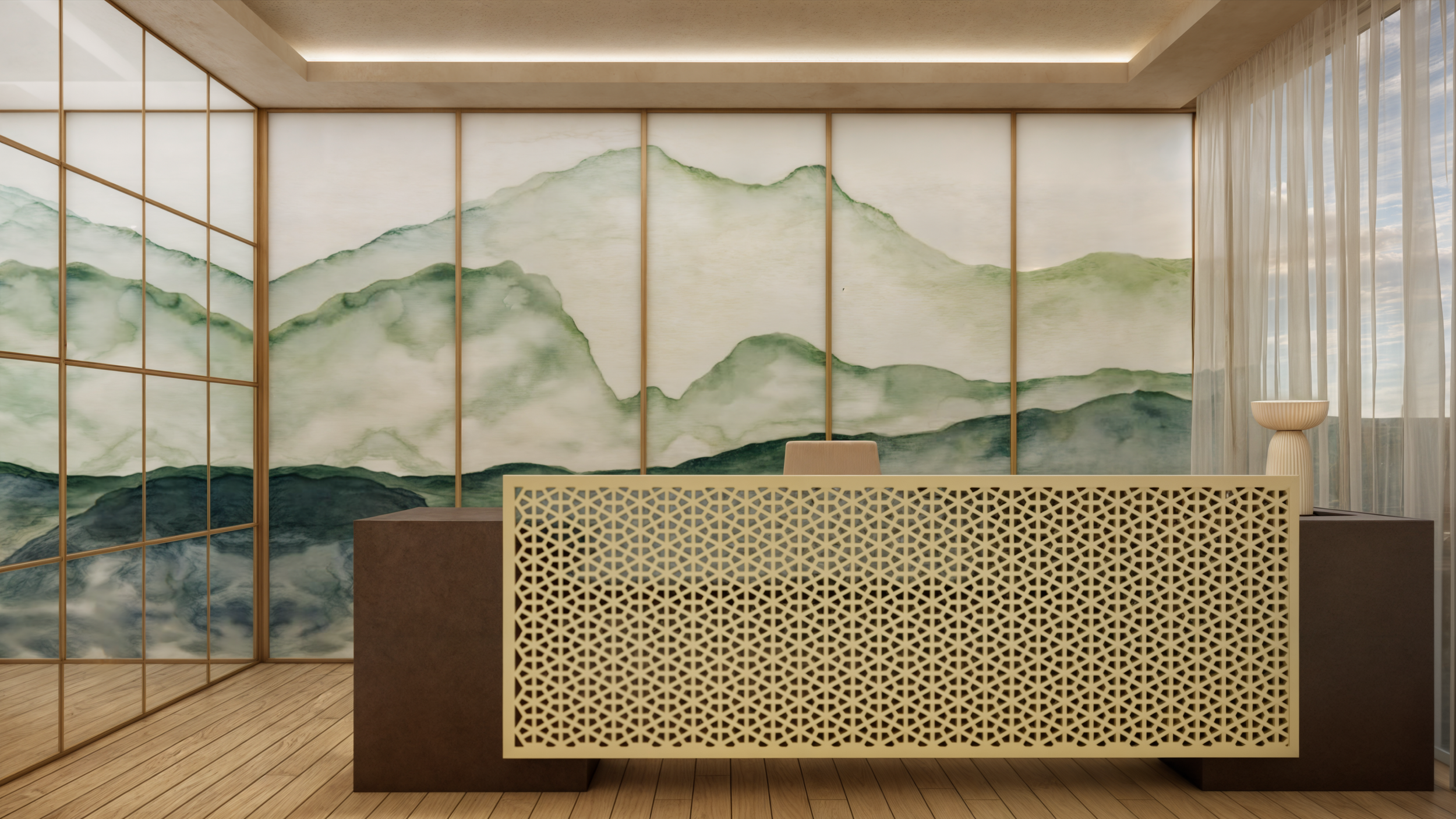
Welcome and reception area, Wellness Centre - Concept visualisation
Where it comes from
Zen Buddhism travelled from China to Japan, and over centuries Japanese designers folded its principles into gardens, temples, tea houses and eventually homes. What carried across was not decoration but discipline: the belief that clarity in a space supports clarity in the person standing in it.
You see it most plainly in the tea room. A small space, one scroll, a single flower, one framed view of the garden. Everything else removed, so that what remains can actually be noticed.
What makes a room feel Zen
Emptiness that is planned
Minimalism strips a room back. Zen design decides what the emptiness is for. Japanese design has a word for it — ma — and treats it as a material in its own right, something you compose with rather than something you run out of.
The difference is legible immediately. A room with three considered objects reads as calm; the same room with three objects and no plan reads as unfinished.
Natural materials, and what they do to us
Wood, stone, metal, paper, linen, wool. These materials vary from piece to piece, age visibly, and carry temperature; they meet the hand warm or cool. That variation is what the body registers as alive, and it is the same mechanism at work in biophilic design. A surface that is perfectly uniform gives the senses nothing to do; a surface with grain, weight and slight irregularity gives them somewhere to land.
I have written more about how each material behaves in natural materials in interior design.
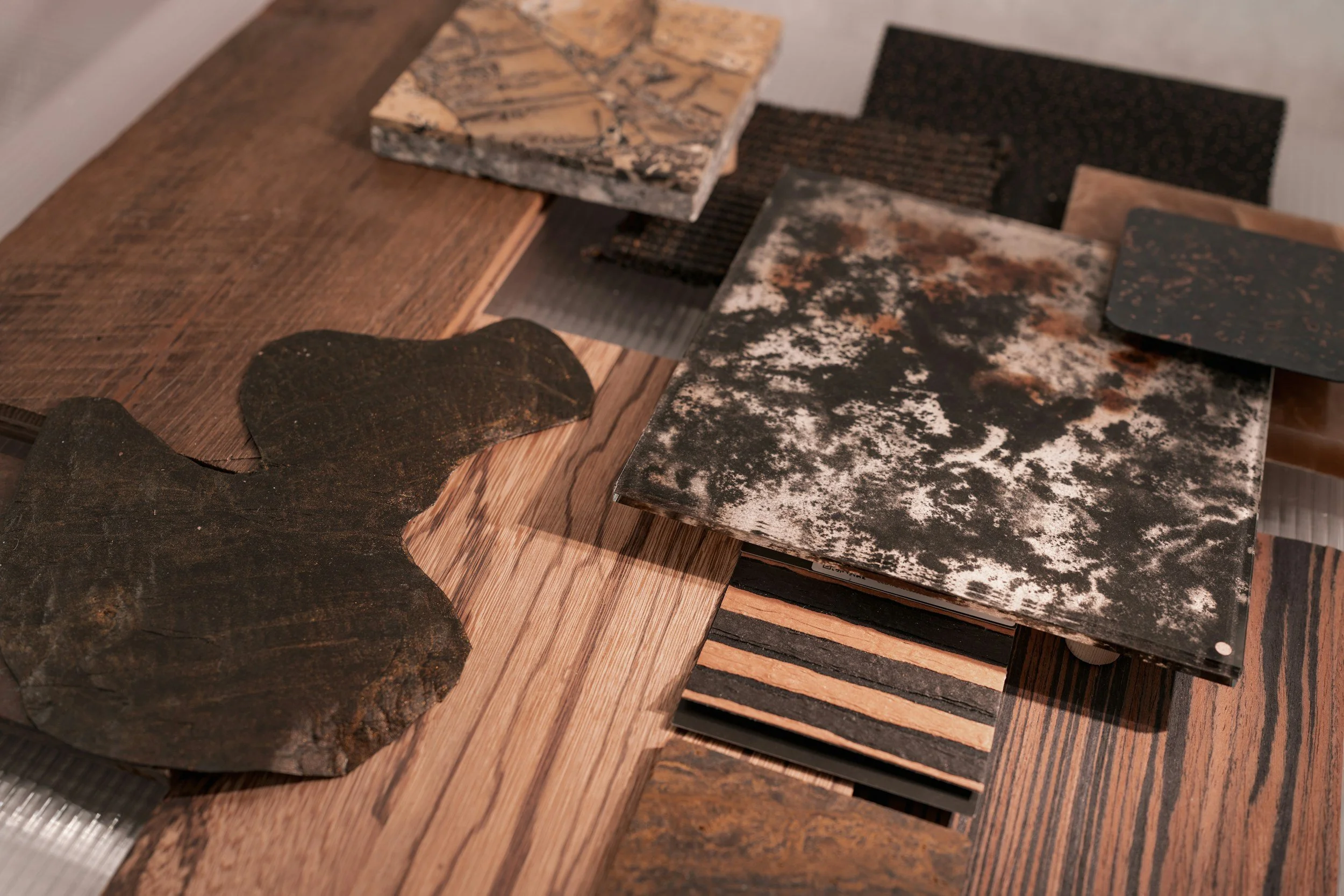
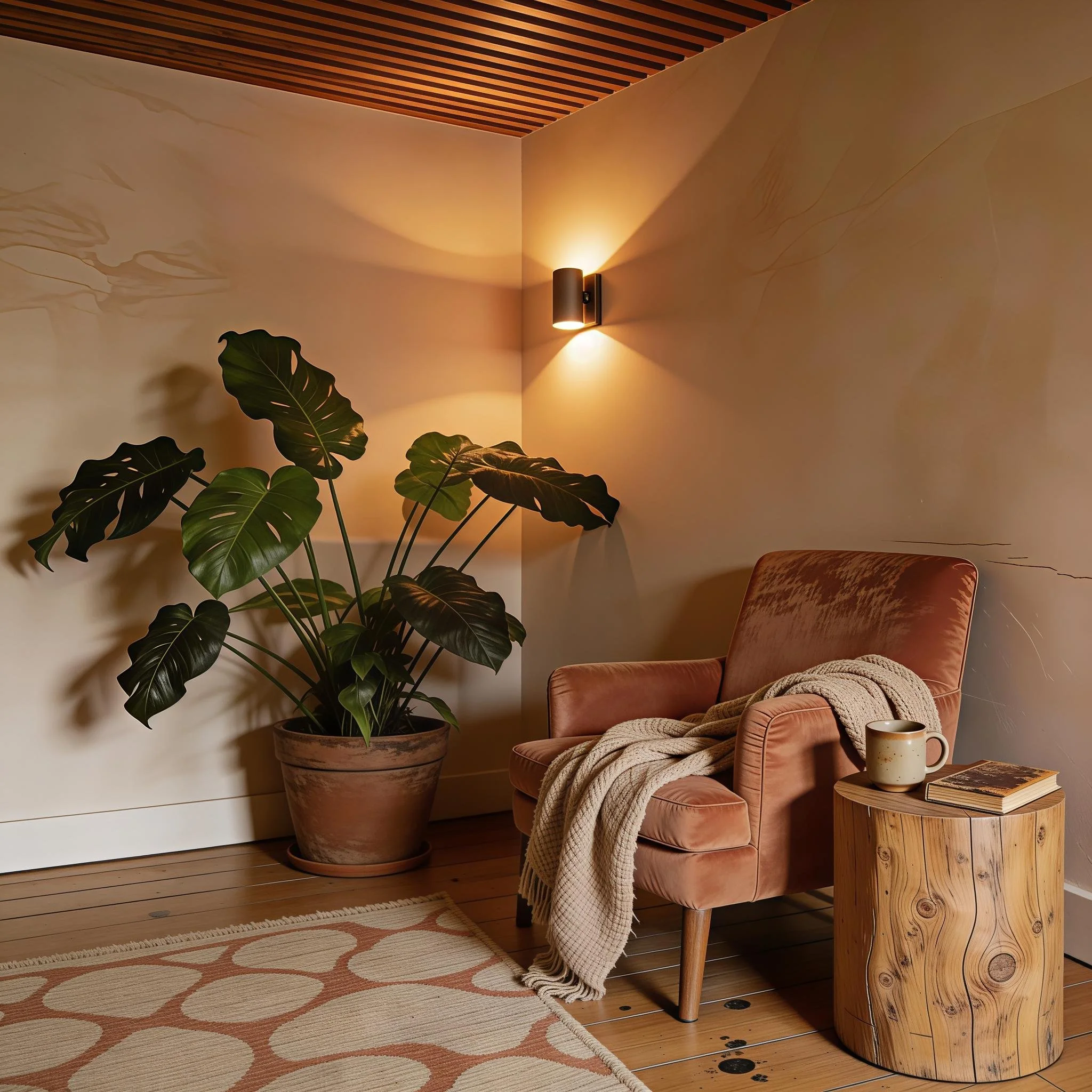
Natural clean materials and neutral colour palette. Including some texture and pattern adds warmth and interest
Light, and the shadow it makes
Western interiors tend to treat shadow as a problem to be lit away. Zen design treats it as half the composition. Light is filtered — through paper, timber screens, a deep overhang — so it changes across the day and tells you what hour it is.
A room lit evenly from every angle at all times is a room with no sense of time passing. That flatness is exhausting in a way most people feel but rarely name. It is one of the reasons design has to work on more than the eye.
Placement that is not arbitrary
In a Zen-inspired room, very little is where it is by default. Furniture sits low and holds the floor. Objects are given clearance so each can be seen on its own. A single view is framed, and the rest of the window left plain, so the eye knows where to go.
This is the part that takes the most time and shows the least. It is also the part that decides whether a room feels composed or merely tidy.
Imperfection, and the marks of use
Wabi-sabi, the acceptance of age, wear and asymmetry, sits underneath all of it. A hand-thrown bowl that is not quite round, a table darkened where hands rest, a wall finish that varies slightly across its length. These are not flaws to be corrected. They are what stops a restrained room from feeling like a showroom.
What Zen design is good at, and what it is not
Zen design is very good at one thing: lowering a room's volume and calming the mind and nervous system. That is exactly what a treatment space needs, and it is often what an overstimulated home needs in a room or two.
But calm is only one of the things a home has to produce. A home also has to hold aliveness, creativity, and the kind of mess that means people are actually living there. It has to work for a quiet Tuesday and for a birthday. It has to serve the person who wants to disappear into a corner and the person who wants to be found.
That is why I rarely design anything pure. Restraint pushed all the way to purity starts to read as control, impersonal and a room nobody can leave a mark on is a room nobody relaxes in. It might feel good for a limited amount of time to serve one purpose, but not for living, connecting and carrying a full life
When a client genuinely wants a purist interior, it can be beautiful, and I will design it. It is simply rarer than the internet suggests. Most of the time the better move is to borrow the discipline and spend it where it counts.
Zen design in a home
So the goal is not a Japanese house. It is to borrow the restraint and place it deliberately.
Choose one room and reduce it, not to nothing, but to what earns its place. Bring in two or three natural materials and let them repeat. Lower the light sources so the room has pools of light rather than one flat wash. Leave one surface completely clear and protect it.
The entry is the highest-return place to begin. It is the threshold between the day you have had and the evening you want, and it takes very little to change what that crossing feels like.
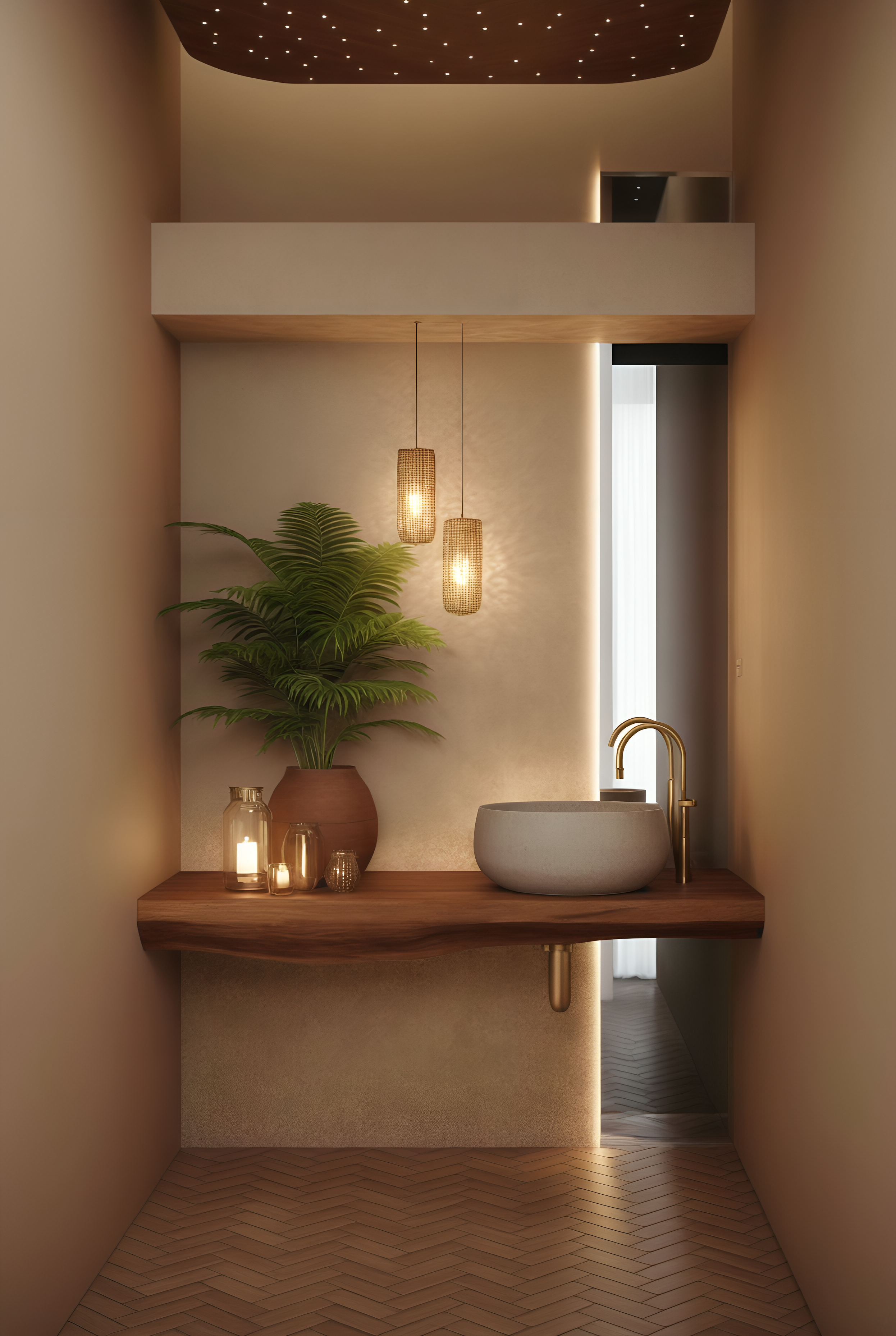
The bathroom or powder room is a natural space for zen design. It is one of the few rooms where the aim is already relaxation and rejuvenation. The materials that suit it- stone, timber, plaster, warm light, and water itself are the ones Zen design reaches for anyway; choosing a simple neutral warm palette will complete the Zen design.
If you have a room to spare, a dedicated meditation or relaxation space is the one place in a home where I would take the restraint all the way. A room with a single job can afford to be spare in a way a living room cannot: nothing has to compete, and there is no second function pulling at the design. It does not need to be large either — a small spare bedroom, a wide landing, even a corner that can be closed off will carry it.
Then let the rest of the house be louder. A home that tells your story is not built from one style, and it does not need to be consistent to be coherent. If you want the calm without the austerity, bringing nature indoors gets you most of the way there with far more warmth.
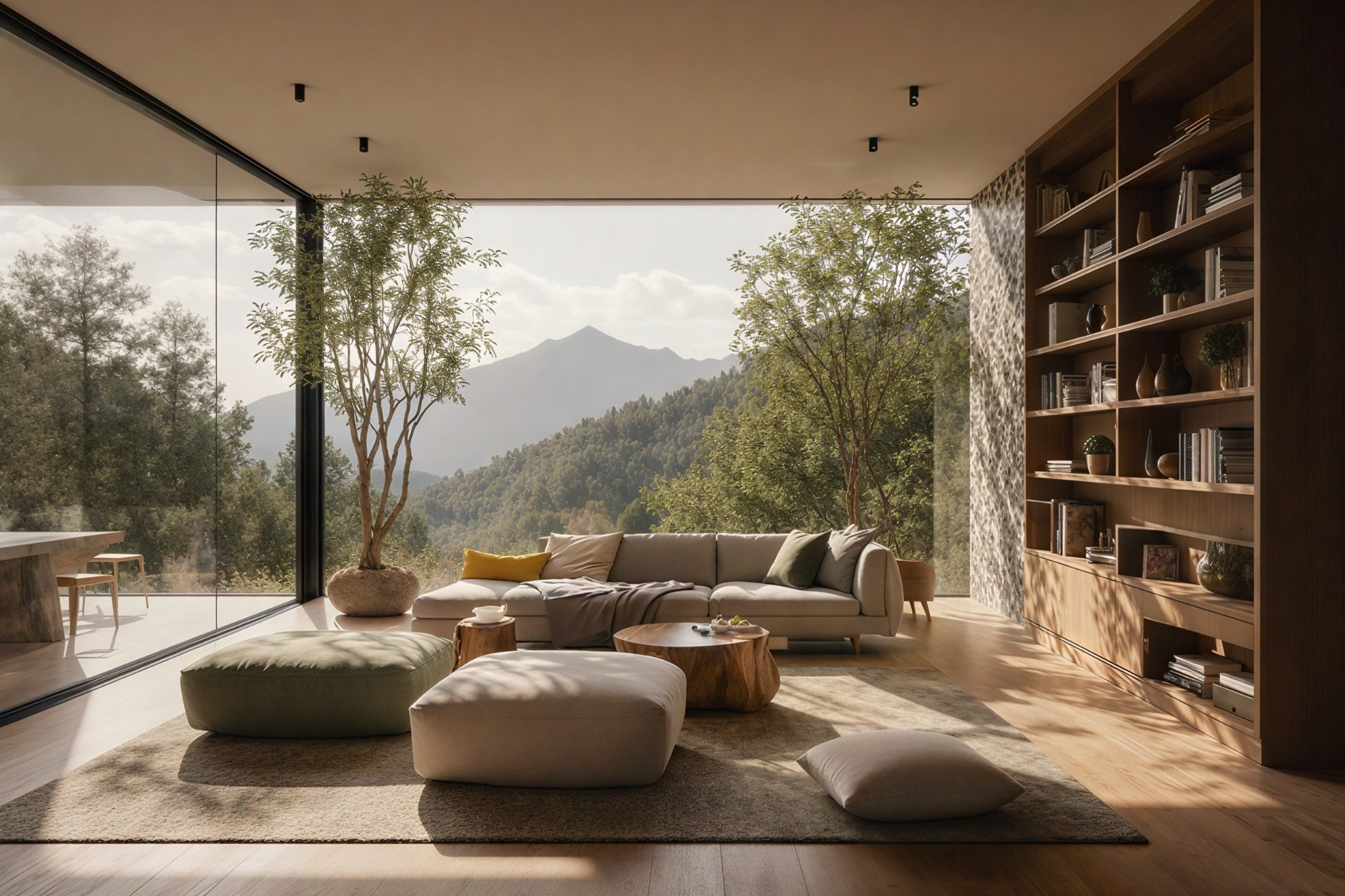
Minimal design with a simple palette and natural materials allows the view and prospect to be the focus and a source of rejuvenation.
Zen design in wellness and treatment spaces
This is where the approach earns its keep professionally, and it is one of my regular starting points when designing clinic, studio or wellness centre.
People arrive at these places at their most open. Everything reaches them: what they see, what they hear, what they smell, the air on the skin, how the space asks them to move through it, and it reaches them before a single word is spoken. Restraint does real work here. There is less to process on the way in, so more of a client's attention is available for the treatment itself. Combined with biophilic design, the space stops merely staying out of the way and begins to support and nurture. The quality of light, the small movement of planting, the sound of water, materials that vary under the hand; these give the senses something gentle to settle on rather than nothing at all.
Two biophilic patterns do the most work: refuge and prospect. The need to feel backed and protected, and still have something to look out at.
Restraint clears the room and calms the mind; biophilic design is what makes it nurturing.
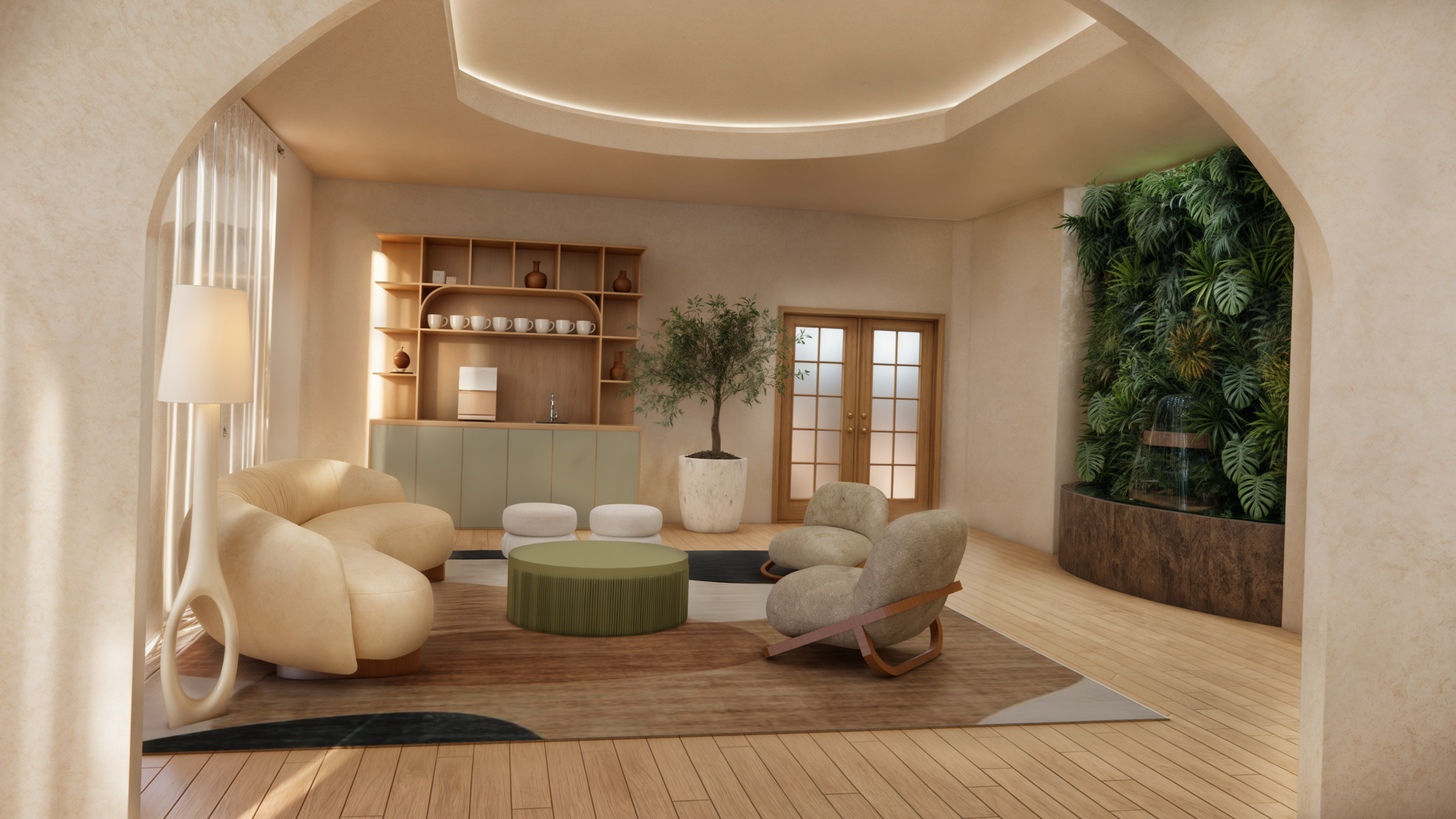
Zen inspired design, Wellness Centre, concept visualization
Combined with biophilic design, Zen-inspired design works best to calm the mind and nervous system while nourishing the whole person
Where to start
Take one room and remove everything that is not earning its place. Live with it for a couple of weeks before you add anything back. Most people find they add back less than they expected, and that the room they were about to redecorate simply needed less.
That is the whole method, really. Zen interior design is not about buying different things. It is about needing fewer of them, and knowing why each one stays; it’s about design that calms the mind and settles the nervous system.
If you are planning a home, a clinic or a wellness space and you are drawn to spaces that calm and rejuvenate, let’s have a chat.
With Joy and Delight!
Nora Bouz, Place Maker, Designer