
Workplace Design That Fosters Belonging
We spend so much of our lives in workplaces. And yet, how often do we ask: Does this space allow me to be myself? Do I feel held here?
Belonging is not about fitting in. It's not about matching a culture or checking a box. True belonging is the felt experience of being seen, of being able to show up without contortion, of knowing that your presence matters — not just your output.
When that sense of belonging is absent, we feel it in our bodies. We contract. We perform. We survive the workday rather than inhabit it.
Design as an act of welcome
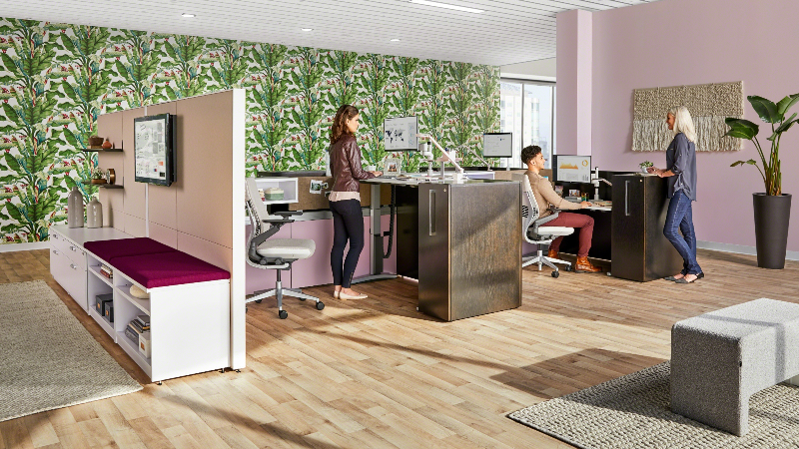
Physical space plays a quieter role in belonging than we often acknowledge. But it speaks to us constantly — in the quality of light, the arrangement of furniture, the balance of positive and negative space, the colour palette, the textures we encounter, the degree to which a space feels cared for.
When an organization invests in creating environments that support the whole person — rest, connection, reflection and growth — it communicates something profound: You are valued here. Your wellbeing matters. And when people feel that, they show up differently. Performance, collaboration, productivity and creativity follow naturally.
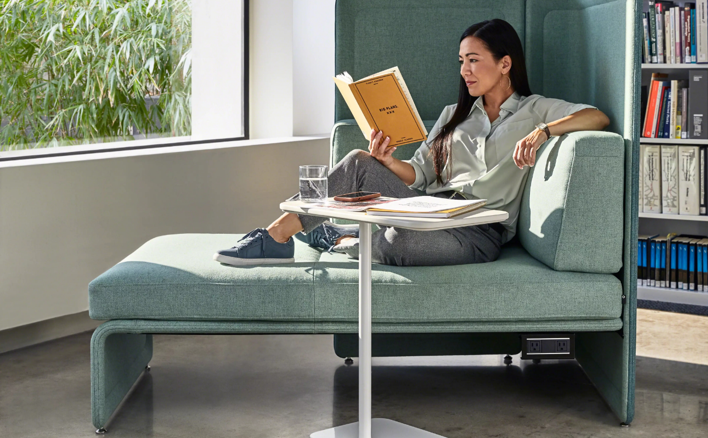
This can be as simple as comfortable seating that invites conversation. A quiet corner for those who need to recharge. A colour palette that enlivens rather than dulls the mood. Natural materials and living plants that remind us we are part of something larger.
Designing for the human, not just the worker
In my work, I've seen how a thoughtfully designed space can shift the entire atmosphere of an organization, not through grand gestures, but through attention to how light falls, to where people naturally gather, to what the space is silently saying to those who enter.
When cultural identity is reflected in the environment — through art, materials, spatial rhythms — people from diverse backgrounds feel acknowledged. They feel at home.
And that sense of home is not a luxury. It's the ground from which creativity, trust, and resilience grow.
The deeper question
Ultimately, designing for belonging asks us to consider: What kind of environment allows a human being to flourish?
Not just function. Not just aesthetics. But the dimension of how a space holds us — and whether it helps us become more of who we are and excel at what we do.
With Joy and Delight!
Nora Bouz, Place Maker, Designer
I bring this way of thinking to every workplace project, no matter the scale. See how we work with businesses and organizations; visit our Workplace Design Services
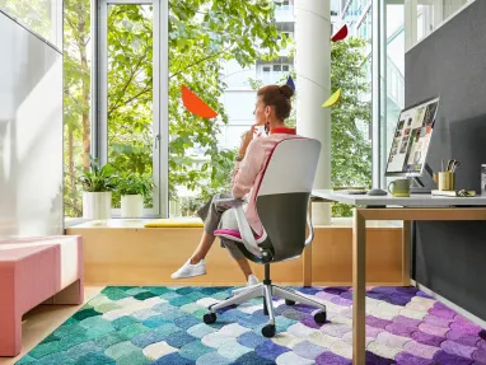
From Steelcase furniture