
Trauma-Informed Design: Spaces That Calm the Nervous System
We often design for wow moments. But what if we started by designing for safe moments first?
The body remembers what the mind tries to forget. And often, our physical surroundings are the loudest reminders.
Trauma-informed design is an approach that considers how environments affect the nervous system, especially for people who have experienced harm, instability, or chronic stress.
It asks: Does this space offer safety? Choice? A place to land, to feel embraced?
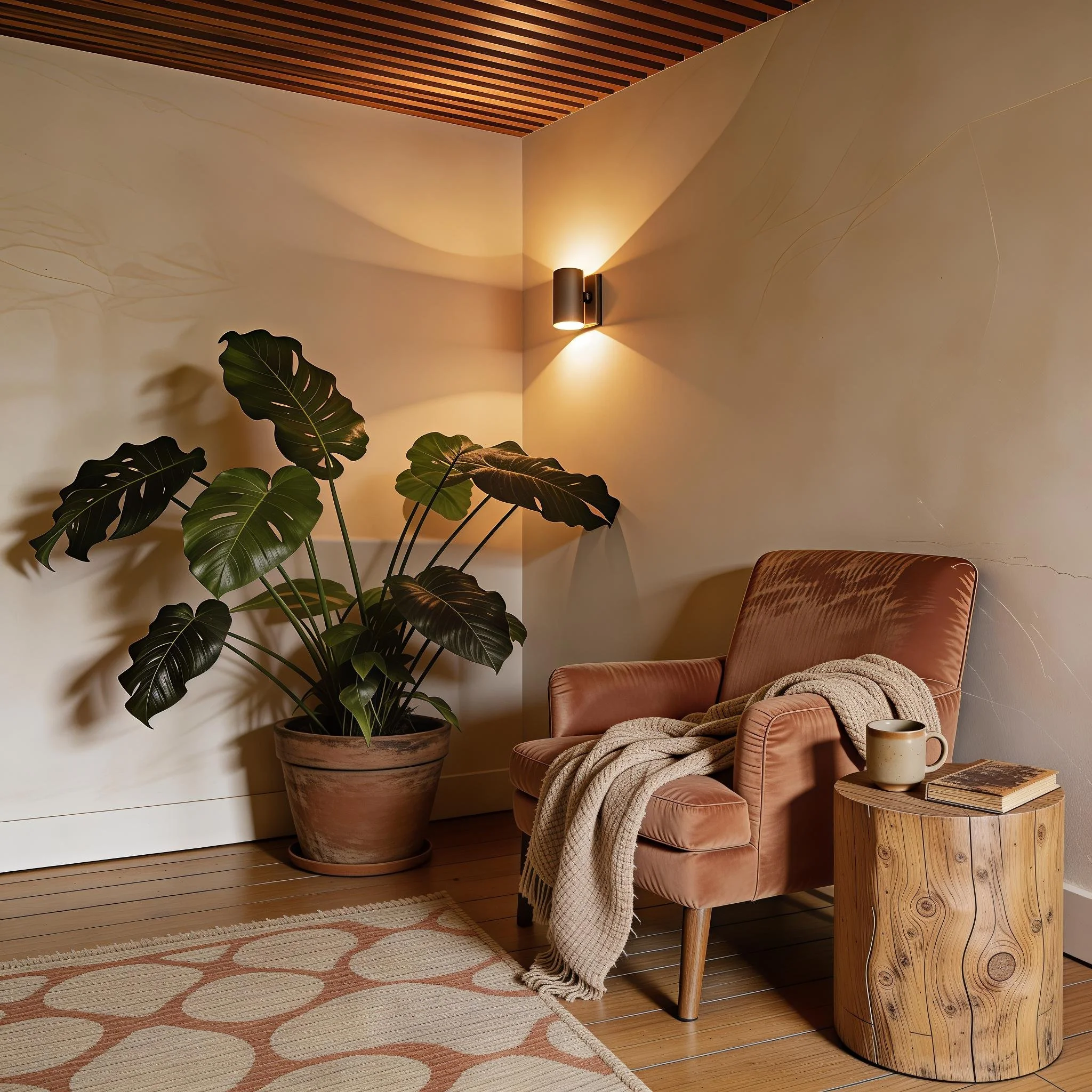
Think about the difference between a room that feels exposing and one that offers refuge. Harsh overhead lighting versus warm, layered light. Nowhere to sit except in full view versus a corner where someone can settle with their back to the wall. Sterile, cold surfaces versus natural textures that welcome and invite rest.
Same room. Same square footage. Very different experience.
What makes a space trauma-informed?
There are several principles that guide this work. They overlap, they support each other, and together they create environments where the nervous system can finally settle.
Safety and security is the baseline.
A space must feel physically and psychologically safe. This includes thoughtful sightlines so people can see who is entering or exiting a room, reducing that startle response. It means avoiding harsh, flickering, or buzzing lights, which can be sensory triggers. It means softening acoustics so sudden noises don't mimic a threat.
Choice and empowerment matter because trauma often involves a loss of control.
Design can give that control back. Flexible seating allows people to choose where they feel most comfortable. Adjustable elements like movable furniture, dimmable lights, individual thermostats, or curtains that can open or close let people shape the environment around them.
Comfort and regulation help the body move from "fight or flight" to "rest and digest."
This is where biophilic design plays a role: plants, natural light, organic shapes and natural textures. Research shows these elements lower cortisol levels. Colour palettes matter too. Muted, earthy tones rather than high-contrast, overly loud patterns that can overstimulate a sensitized system or cold and sterile colours that elicit loneliness, isolation and hostility
Navigability and wayfinding address the anxiety that spikes when we feel lost or trapped.
Intuitive layouts mean a person can look around and immediately understand how to exit or where to go without having to ask. Reducing visual noise and clutter helps a nervous system that's already working overtime.
Social connection and privacy need to coexist.
Spaces should allow for human connection without forcing it. The "refuge" concept creates small alcoves where someone can observe a room without being in the centre. The balance is designing areas for community interaction alongside quiet zones for decompression.
Cultural and historical context acknowledges that different communities have different triggers and needs.
The art, textures, and layout should reflect the identity and dignity of the people using the space. This also means moving away from that cold, sterile, institutional feel that can be dehumanizing or reminiscent of past negative experiences.
Who does this serve?
This matters deeply in spaces that serve people who are already vulnerable: clinics, therapy offices, wellness and mental health centres, recovery centres, and housing for those who have experienced abuse or displacement.
For the people these spaces serve, design isn't neutral. Design can be triggering, opening old wounds, or it can hold them tenderly and elicit feelings of safety. Safety isn't a grand gesture. It's the moment the shoulders drop. The breath slows and deepens. The guard comes down, even just a little.
A personal note
My path to this work came through both study and lived experience. I've been in interior design since 2005, and in 2015, I began exploring environmental psychology, biophilic design, and the connection between space and wellbeing. That shift wasn't only intellectual. It came alongside my own journey of soul-searching and healing, learning firsthand how much our surroundings shape our capacity to feel safe and to begin again.
The two paths are inseparable for me.
Trauma-informed design is still emerging in Canada! And this is an area where we can contribute. We create environments coherent with the mission and values of therapy and counselling practices, wellness and mental health centres, recovery centres, clinics, and housing serving those who have experienced abuse or displacement.
If your space serves vulnerable populations and you're curious about what trauma-informed design could look like, I'd welcome the conversation.
With Joy & Delight!
Nora Bouz, Place Maker, Designer
I bring this way of thinking to every project, whatever its scale. See how we work with homes, cohousing and community housing, clinics and wellness centres and workplaces.