
What Makes a City Vibrant? Design Lessons for Community Places
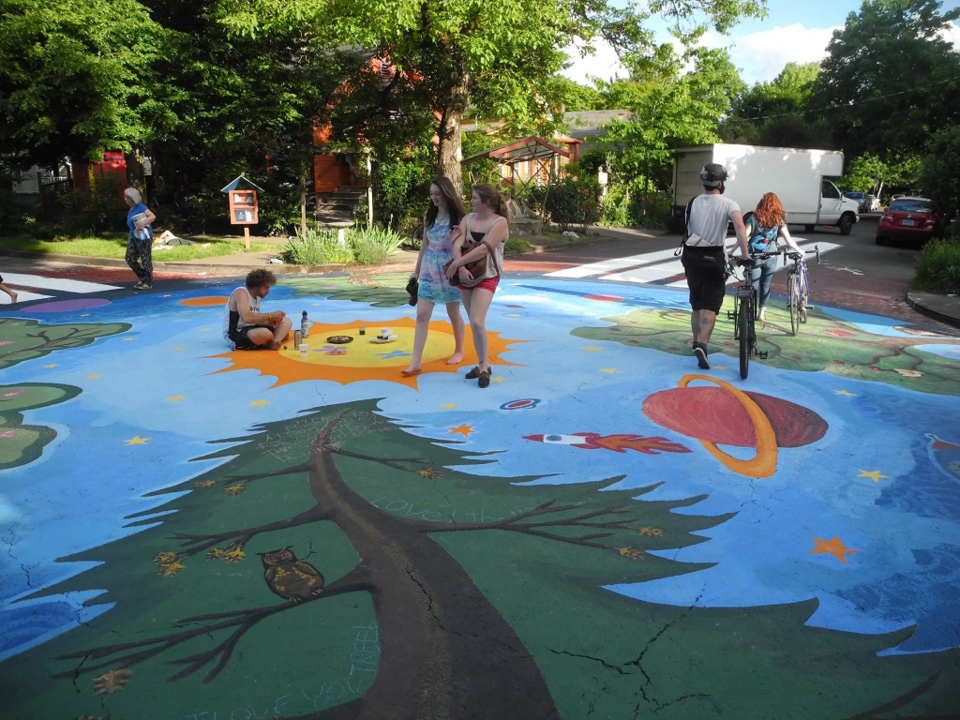
Photo by The City Repair Project, Portland
Creating a vibrant city is a high priority for many municipalities. Civic leaders put much thought and effort into forging a dynamic community through art and cultural projects.
But what does vibrancy mean, and why is it the focus of many municipalities, including our own?
Vibrancy means pulsating with vigour and energy. Vibrant cities are stimulating and vital and resonate with high energy, optimism, and active engagement. Vibrant communities are attractive to live in and visit. Vibrancy encourages curiosity and deeper connections and adds richness and meaning to people's lives.
Galleries, theatre and celebrations can create cultural dynamism, but the base and bedrock beneath these events is the physical environment upon which buoyant communities are built. Architecture, design, and the infusion of natural elements create a lively ambience for all, creating visual vibrancy through the use of colour and ways for people to intersect and engage.
Colour
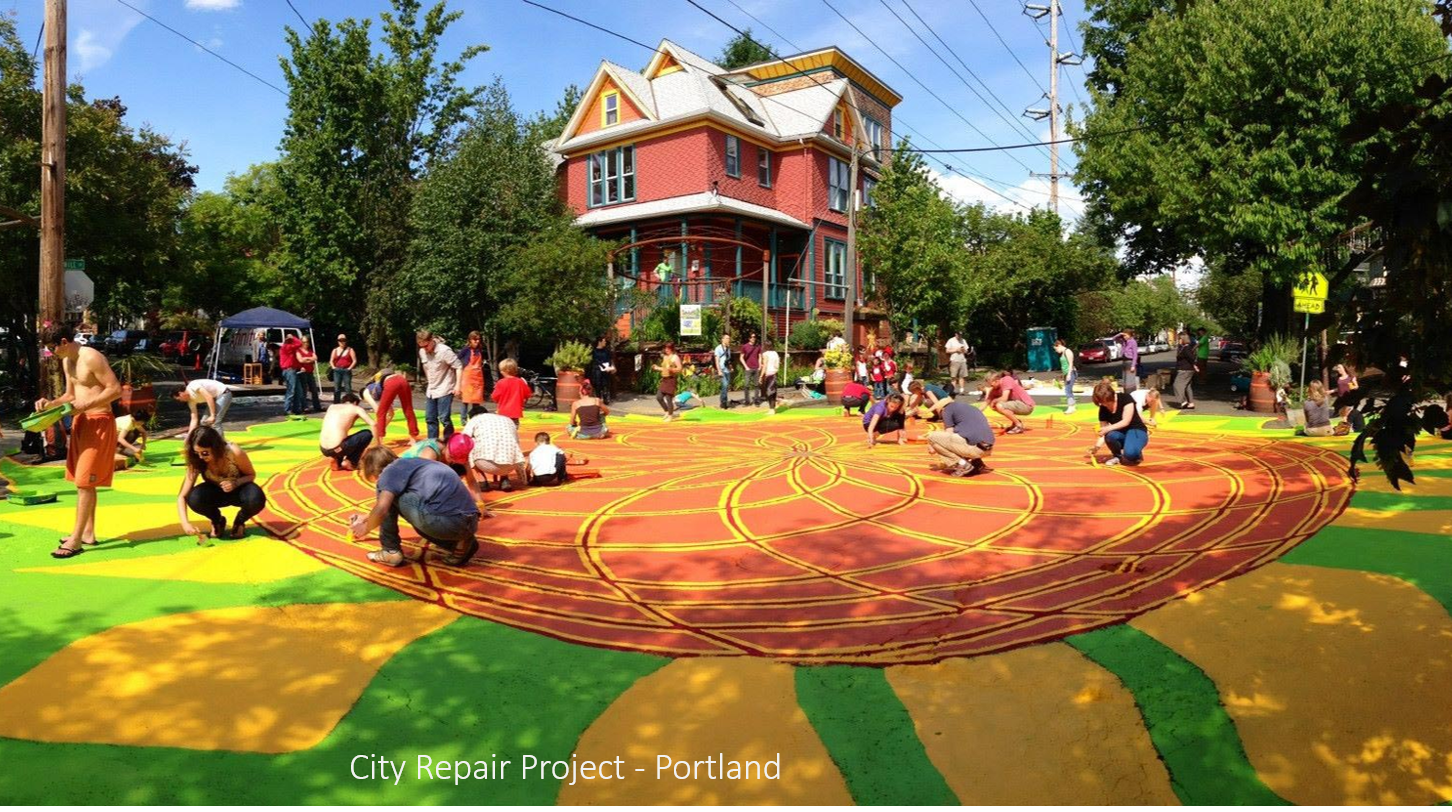
Photo By City Repair Project
Vibrant colours impact our daily experience and play an essential role in our communities’ vitality. For many years, there has been a tendency in North America to choose exterior colours that blend in with nature, and muted pallets are still seen in cities across Canada. Although harmony with nature is a great concept in rural areas, this approach doesn't necessarily apply to urban developments. When we consistently use a limited neutral palette on the exterior of structures with no or little detail, pattern or texture, we turn our cities into dull, uninspiring places. In turn, such environments elicit similar feelings in their occupants.
Bringing People Together
Grid design has taken over North American urban planning for its simplicity, low cost, and ease of navigation. However, it’s not the best formula for interesting and aesthetically pleasing design, nor does it encourage interaction and engagement among neighbours.
A small organization in Portland, Oregon, The City Repair Project, originally founded by architect Mak Lakeman, has found a solution to transform dull grid-designed neighbourhoods into vibrant and connected communities. Their projects involve intersection murals and ecological landscaping, painting their city with vibrancy and eco-friendly beauty. So, their work is about transforming urban spaces into vibrant hubs of creativity, connection and community life.
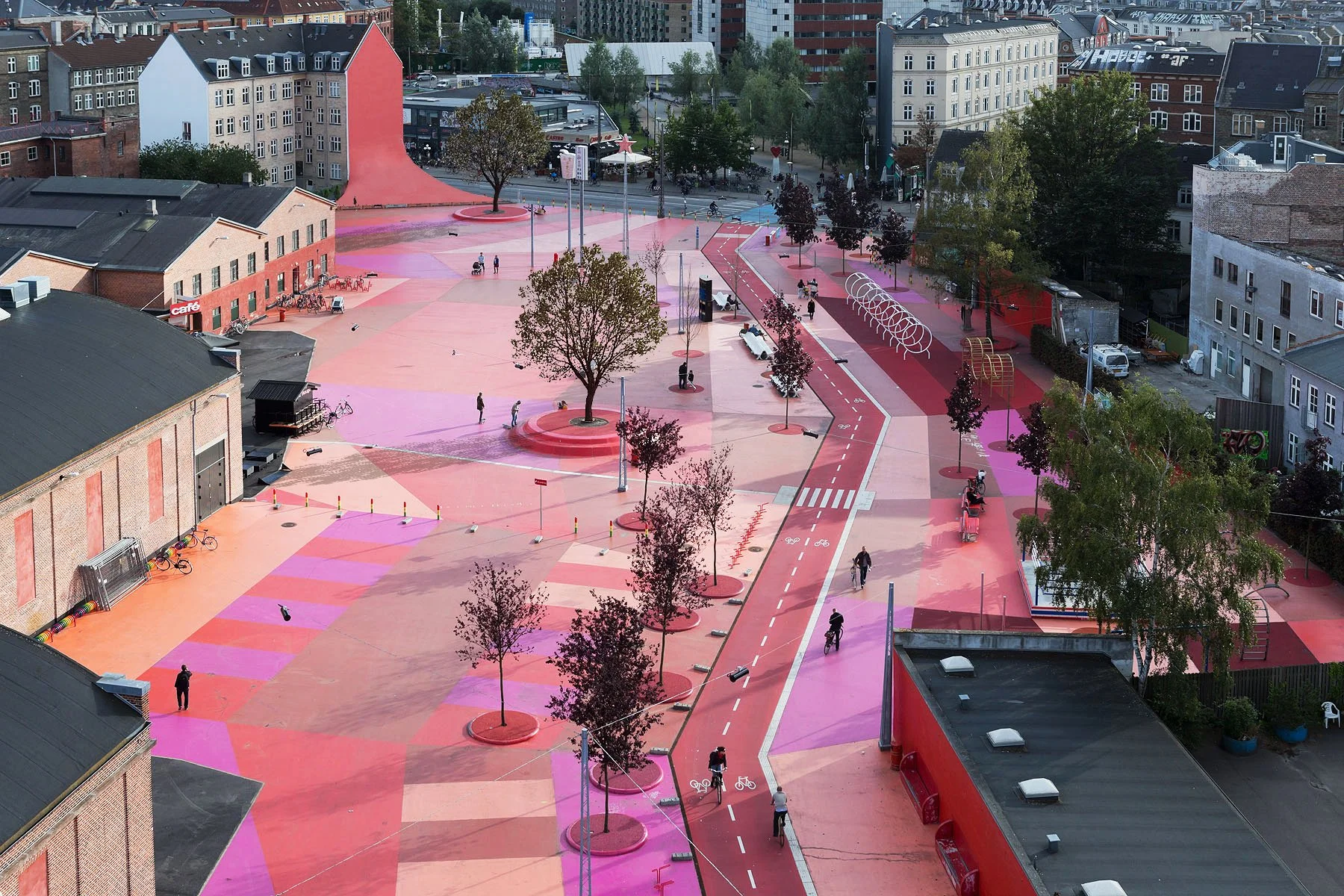
Superkilen Park, Copenhagen. Photo by Architizer
Superkilen Park in Copenhagen is a testament to innovative urban design, featuring interactive installations from various countries. The park, designed by Bjarke Ingels Group (BIG), Topotek 1, and Superflex, showcases vibrant bike lanes and playground equipment that encourage social interaction and engagement. This dynamic public space is designed to bring together people of all ages and backgrounds, creating a unique and diverse cultural experience in the heart of the city.
In many Canadian cities, long winters limit outdoor activities and interaction among residents. The prevalence of indoor parking further restricts social connection. To address this, we need to prioritize the development of vibrant, well-designed public spaces that promote community engagement and interaction. By creating attractive and inviting urban environments, we can foster individual and collective flourishing within neighbourhoods.
With Joy & Delight!
Nora Bouz, Place Maker, Designer
Curious how we design for inclusion and aliveness? see our Approach Page